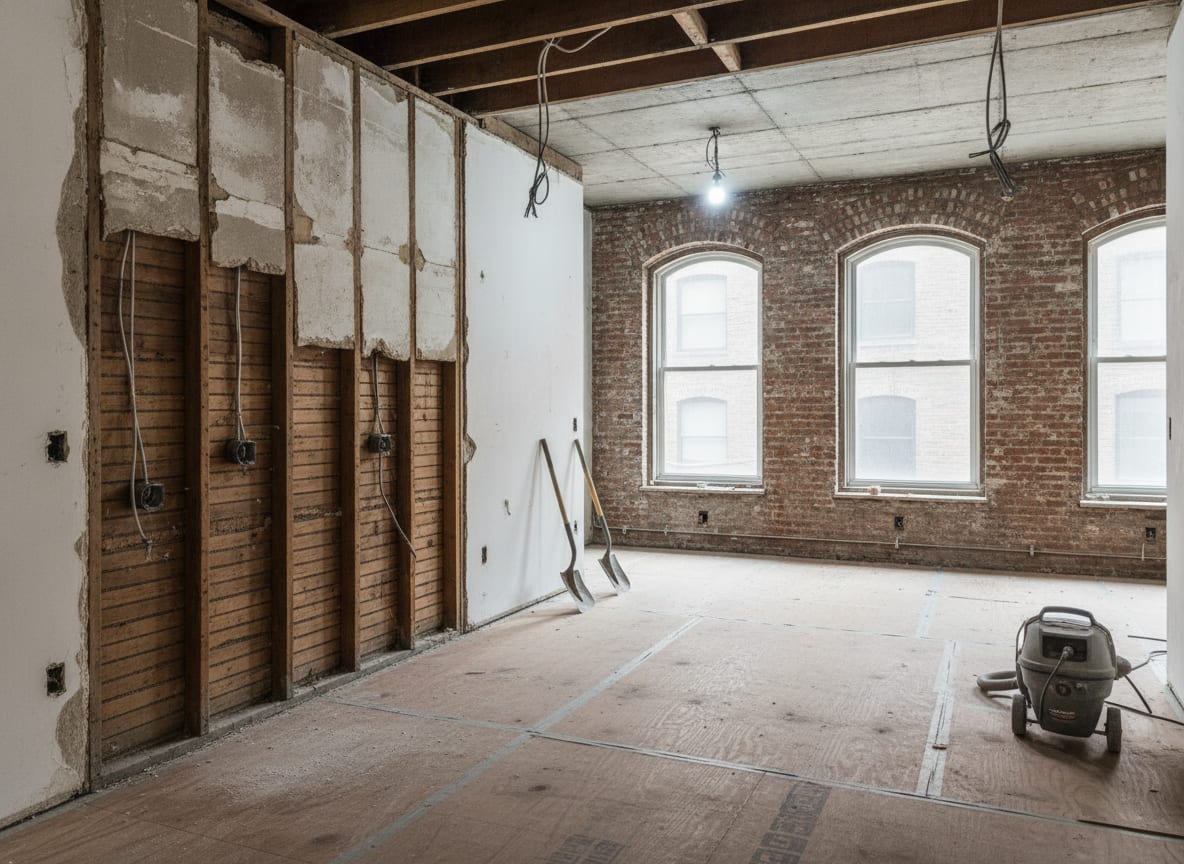
Interior Demolition
Kitchens, bathrooms, flooring, partitions and full gut-outs, run inside occupied buildings.
Interior demolitionDemolition across Manhattan
Call for an estimate: (929) 205-0712
Manhattan, NY
Interior strip-outs, structures, concrete and the debris that comes with all of it. We plan the job around your building, not the other way around.
or leave your details
Most demolition in Manhattan happens inside a building that stays standing, with people still living and working in it. That is the job we are set up for.
We take out kitchens, bathrooms, partitions and whole interiors. We break out concrete and masonry. We take structures down. And we clear the material away afterwards, which in this borough is often the part that decides how long everything else takes.
Tell us what needs to come out and where it is. We will tell you how we would approach it, what it depends on, and what happens next.
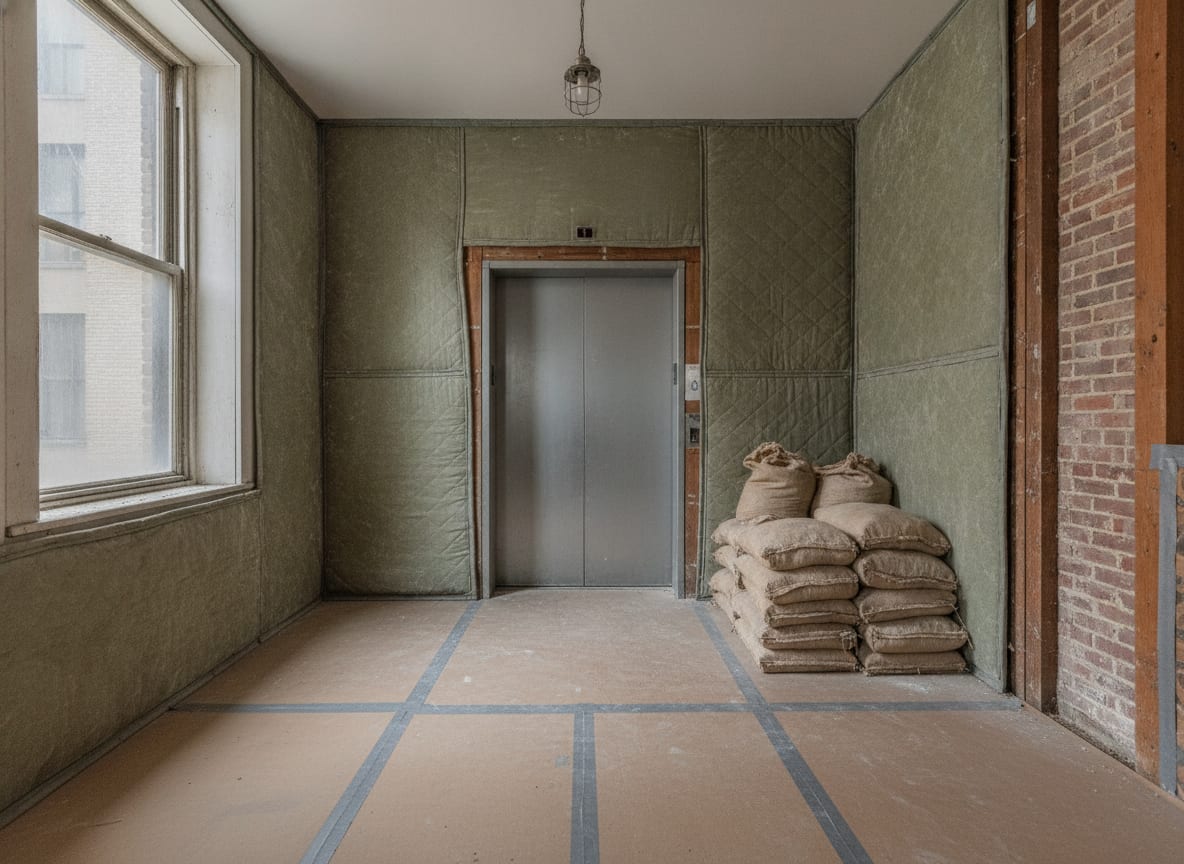
A Manhattan job is rarely limited by how fast material can be broken up. It is limited by how fast it can leave. There is no service alley. Everything travels through the building, down a freight elevator that is shared and scheduled, through a lobby that has to be protected, and out to a stretch of curb that is metered and contested.
We plan that route before we plan anything else. It tells us the crew size, the sequence and the realistic finish date, and it is the difference between a job that runs quietly and one your building remembers.
We will tell you how we would do it and what it depends on.
Four services, and one Manhattan job often needs more than one of them.
Kitchens, bathrooms, flooring, partitions and full gut-outs, run inside occupied buildings.
Interior demolition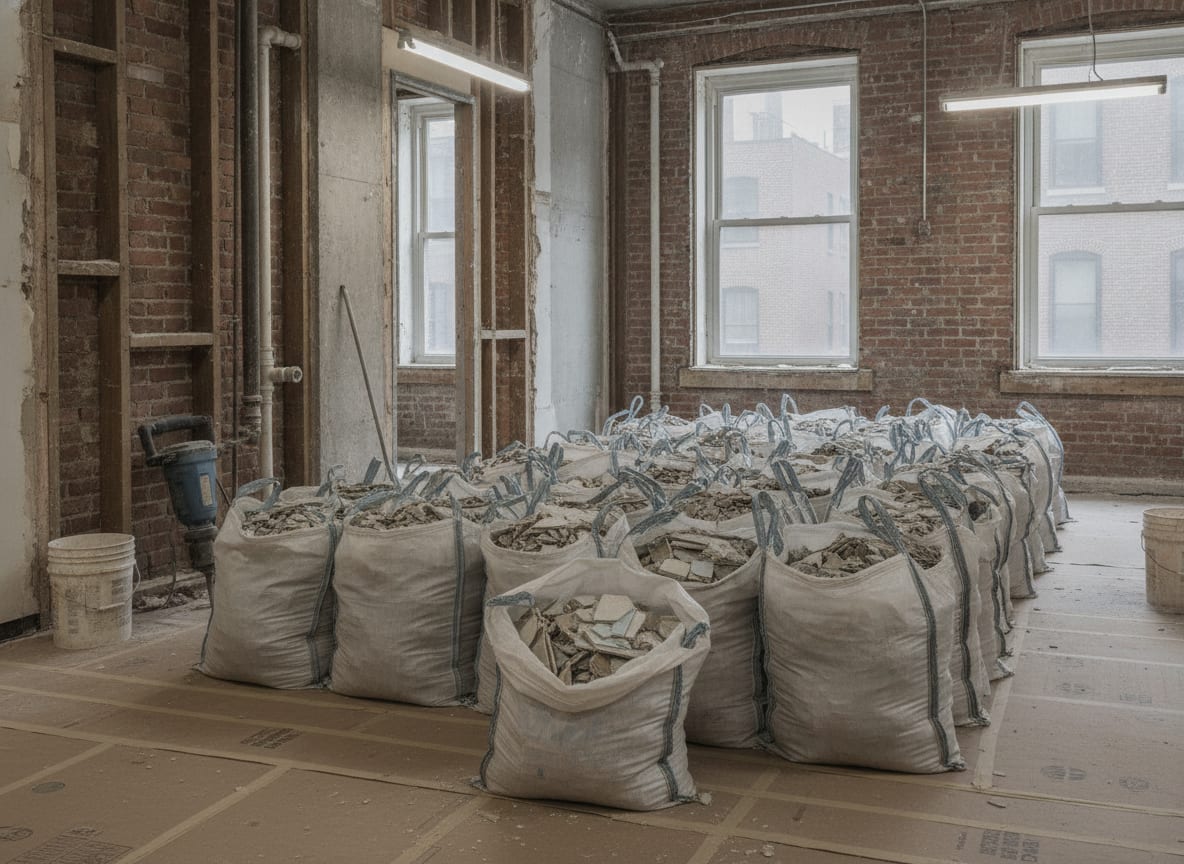
Getting the material out of the building and disposed of the way the city requires.
Debris removal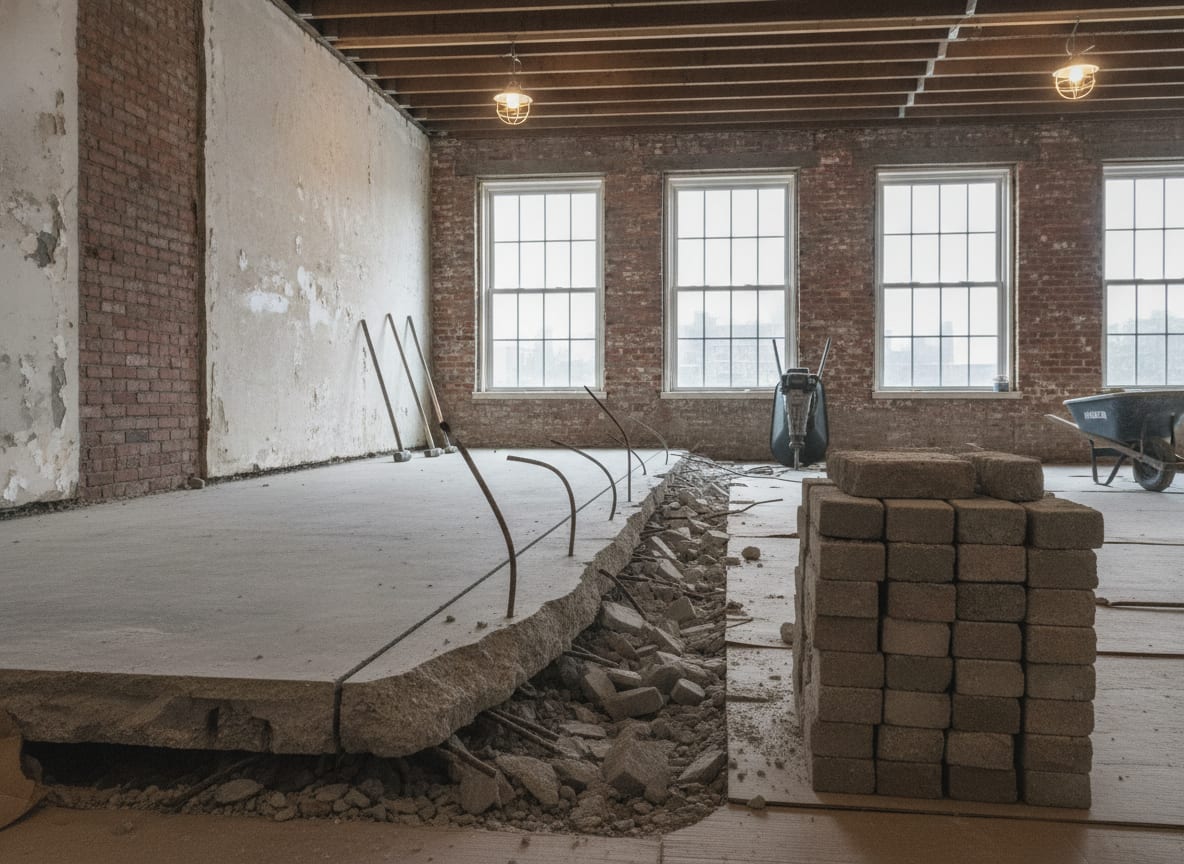
Slabs, stairs, footings and masonry cut, broken out and carried away.
Concrete removal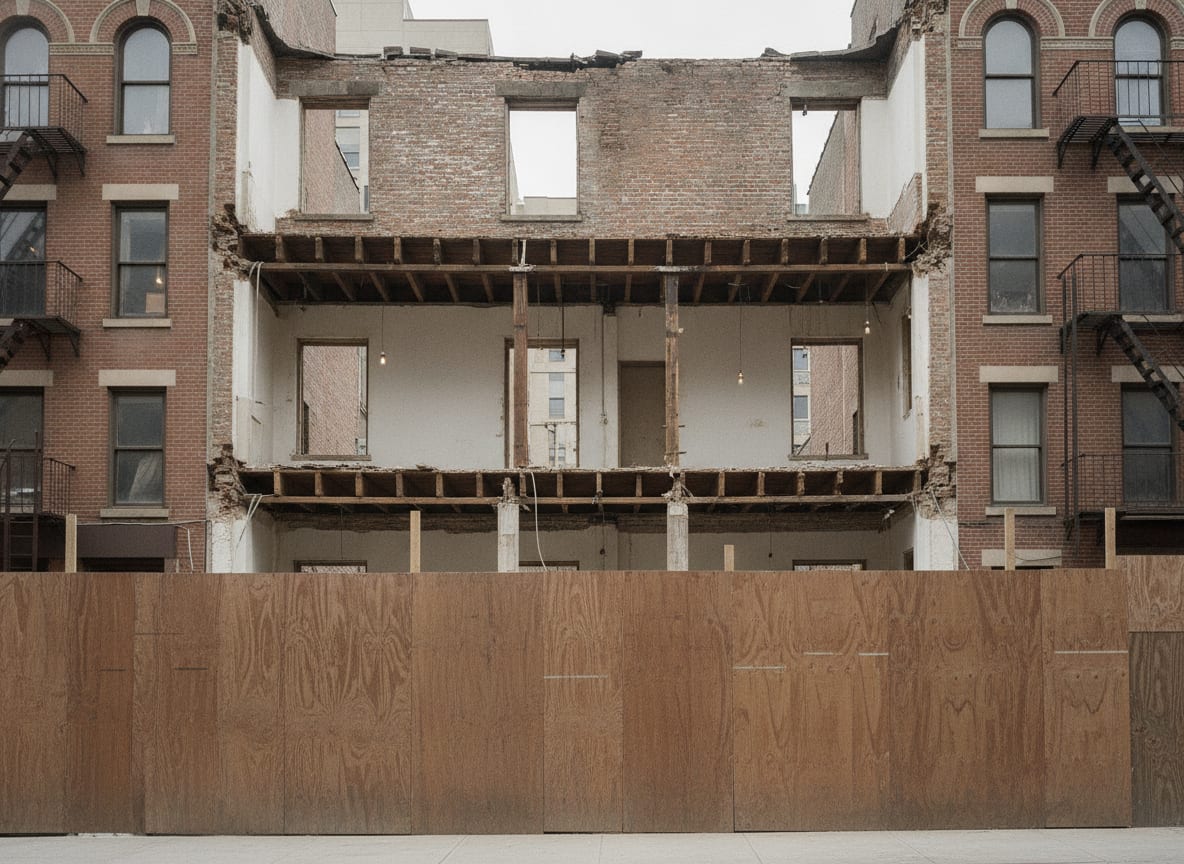
Structural work, with everything around it protected and the site left clear.
Building demolitionThe same four stages whether it is one bathroom or a whole floor.
What is coming out, what is staying, what is behind it, and how material will leave the building.
A written scope and price before anything starts, so there is no argument about what was included.
Access booked, common areas covered, dust containment built, utilities isolated where they need to be.
The work happens in the agreed hours, and the space is left swept and ready for the next trade.
The four stages are easy to plan. The band underneath is the part that moves.
Describe it and we will tell you.
Two different questions, and they rarely have the same answer.
Volume and material. Tile, plaster and concrete are heavy and disposal is charged on weight, so a small bathroom can outweigh a large bedroom. This is most of the price.
A booked freight elevator, a shared car, or stairs. The same room costs differently in two buildings, and access is the single biggest swing on labour.
Insurance on file, an alteration agreement, an elevator slot, and a filing where the work needs one. This is what usually decides the date rather than the price.
Breakara Demolition works across New York City, Manhattan included.
It comes down to how much is being removed, what it is made of, how hard it is to get out of the building, and how much of it there is to dispose of. A bathroom in a building with a good freight elevator and a bathroom in a fifth-floor walk-up are different jobs at the same square footage.
We do not quote a figure over the phone before we understand those things, because a number given blind is a number that changes later. Tell us the address and what is coming out and we will get you a real one.
It usually depends on your building rather than on us. Most buildings want an insurance certificate on file and a booked elevator slot before a crew arrives, and that scheduling is the part with the longest lead.
Once we know the building, we can tell you what the realistic start looks like.
Yes. A single kitchen or one wall is normal work, and it is quoted and run the same way a larger job is.
The address, what you want removed, and whether you know your building's rules on work hours and elevator access. If you have photographs or a floor plan, they help. If you do not, we will work it out on the call.
Interior or soft demolition strips the inside while the building stands. Selective demolition removes specific structural parts while the rest stays. Full demolition takes the whole structure down.
Most Manhattan work is the first two, and a single job often uses both.
Almost always, and it is what our method is built around. Sealed containment at the work area, protection along the full route out, work inside the hours your building allows, and material staged so it moves in scheduled runs rather than trickling through the lobby all day.
Send the building, the floor, and what needs to come out.