
Construction Debris Removal in Manhattan
Getting the material out of your building and disposed of the way New York City requires.
Professional demolition waste is not household garbage
This is the part most people are surprised by, and it is worth knowing before the work starts.
The Sanitation Department is explicit about it. Construction and demolition waste generated by professional contractors cannot be discarded as residential garbage. It does not go out with the building's trash, it does not go in the building's bins, and a superintendent who finds it there is entitled to be unhappy about it.
Instead the material has to leave through a private trash removal service, usually as a dumpster or as a scheduled carter collection. The Business Integrity Commission certifies waste haulers in New York City and keeps the list of registered haulers approved to remove construction and demolition waste.
So a demolition job in this city is really two jobs. Taking the material out, and getting it lawfully off the property. We handle both, and we would rather you knew how the second one works than found out on day three.
Where the material actually goes
Four handovers between your floor and final disposal, and each one has a rule attached.
Getting it out of the building
Manhattan has effectively no service alleys. Material comes out through the building, and that means the freight elevator, a protected route through the common areas, and a stretch of curb at the other end that is metered, shared and time limited.
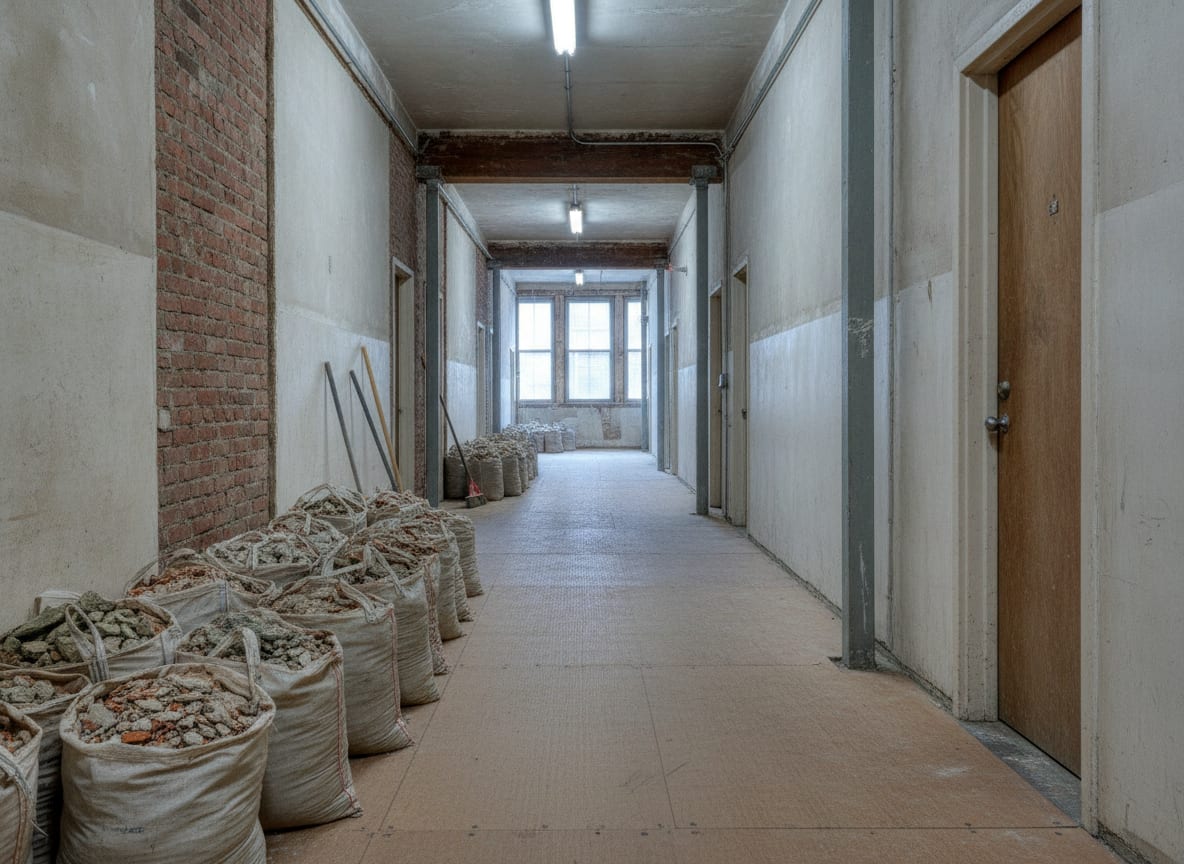
That route decides the shape of the whole job. We bag and stack as we go so the material is ready to move in scheduled runs rather than trickling out, we book the elevator around the building's own traffic, and we size the container to the curb space that is realistically available rather than the one we would prefer.
Where a dumpster on the street is not workable, the material goes out as scheduled carter collections instead.
- Bagged and stacked as work proceeds
- Freight elevator runs booked in advance
- Protection down along the full route
- Container sized to the curb space available
- Carter collection where a street container will not work
Need a clear-out rather than a demolition?
We take removal on its own.
What we clear
- Demolition and strip-out debris
- Plaster, drywall, lath and ceiling material
- Tile, stone, brick and masonry
- Concrete and screed
- Timber, plywood, particle board and laminate
- Old cabinetry, joinery and fixtures
- Flooring and underlay of every type
- Post-renovation clearance and site tidy
Does the container need its own permit?
It depends on what else the job is already permitted for, which surprises most people.
Material with its own disposal route
Some material cannot go in a general container and has to be handled separately. Asbestos is hazardous waste and is never set out with trash or recycling. Where a survey identifies it, it goes to a licensed hazardous material disposal route through the specialists who are qualified to handle it, and the demolition around it waits until that is done.
Treated wood, laminate and vinyl flooring are not compostable and are disposed of as trash rather than recycled. Glass and mirror cannot be recycled and are taped or double bagged before they move, which is as much about the person carrying them as it is about disposal.
We sort as we go, because sorting on site is cheaper than paying to send recoverable material to landfill.
The clean-up is not an afterthought. It is half the job.
We take removal on its own, or as part of the demolition.
Call for an estimate: (929) 205-0712Debris removal questions
How do I dispose of construction debris in New York City?
If a contractor did the work, the debris has to go through a private trash removal service rather than out with the residential garbage. That is the Sanitation Department's rule for professional construction and demolition waste, and it applies whether the job was a whole floor or a single bathroom.
In practice that means a container arranged through a private carter, or scheduled collections where a street container is not workable. The Business Integrity Commission certifies the haulers approved to carry this material.
Work you did yourself, without hired help, is treated differently and is collected at the curb under the city's do-it-yourself rules, with a limit on how many large items go out per collection day.
Do you need a permit for a dumpster in NYC?
For a container placed on a city street, usually yes. NYC DOT requires a commercial refuse container permit to temporarily place a container on the roadway for things like clean-outs and remodelling work.
There are two published exceptions, and they are the reason the answer is not a flat yes. If the job already requires a Department of Buildings permit for the construction activity, or already requires a DOT building operations and construction activity permit, a separate container permit is not required.
So whether your job needs one depends on what else it is already permitted for. We sort that out as part of arranging the container rather than leaving it with you.
What can you legally put in a container?
General construction and demolition debris: plaster, drywall, timber, tile, masonry, flooring, old cabinetry and fixtures.
Not asbestos, which is hazardous waste with its own disposal route. Not liquids, paints, solvents or gas cylinders. Appliances containing refrigerants are handled separately.
Mixing any of those into a general container is how a load gets rejected at the transfer station, which costs a day and a second haul.
How much does construction debris removal cost?
Mostly by weight and volume, which is why the material matters more than the room. Tile, plaster and concrete are heavy and fill a container fast. Cabinetry and timber are bulky but light.
After that it is access. Material that goes out in booked elevator runs costs less to move than material carried down five flights by hand, and a container that can sit at the curb costs less than repeated scheduled collections.
We price the removal against what is actually coming out, and where it is part of a demolition scope it is itemised so you can see it.
Can I just throw construction debris out with the trash?
Not if a contractor did the work. Professional construction and demolition waste is specifically excluded from residential collection in New York City and has to leave through a private carter.
It is worth getting right. The building is the one that gets the complaint, and it is your relationship with them that pays for it.
Do you take the debris away on the same day?
Usually the material moves out in stages as the work goes rather than all at the end, because that is what the elevator schedule allows and it keeps the work area usable.
On a small job it often all leaves the same day. On a larger one we agree the removal schedule with you and the building up front.
Ready to price the clear-out?
Tell us what is there and where the building lets us load.