
Building Demolition in Manhattan
Structural work, with everything around it protected and the site handed back clear.
Taking a structure down in a dense city block
In Manhattan almost nothing stands on its own. The work is as much about what stays up as what comes down.
Structural demolition here usually means a building sharing party walls with neighbours, a sidewalk carrying pedestrians a few feet away, and services running through the site that other buildings depend on. The sequence has to protect all of that while the structure comes down in a controlled order.
We take on structural and whole-building work at the scale that suits it, and we are straight with you about which jobs suit us and which want a specialist with heavy plant.
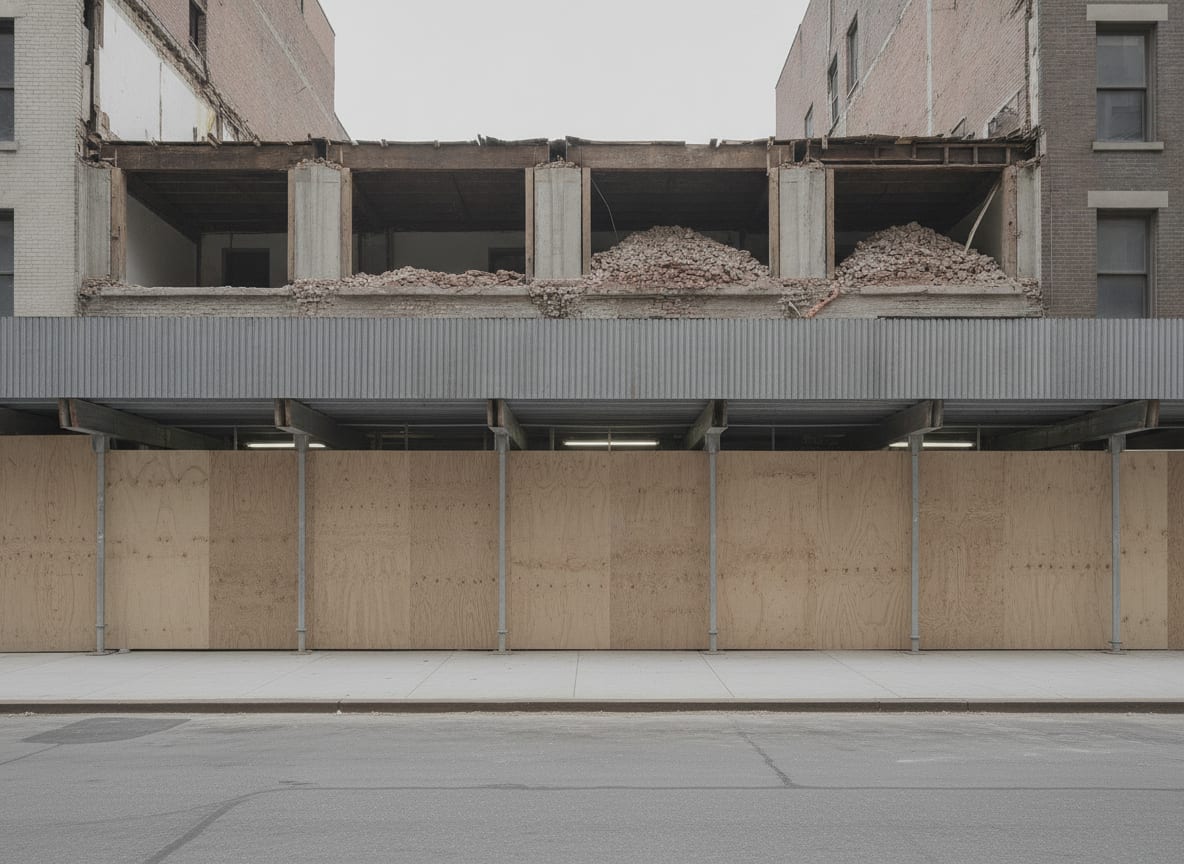
Before anything comes down
The preparation is longer than the demolition on most structural jobs, and skipping any of it is what turns a demolition into an incident.
Utilities are located and disconnected at the supply rather than at the building. Anything hazardous is surveyed for and dealt with by the specialists who handle it, before general demolition starts. Neighbouring structures and party walls are assessed and supported where they need it. The public is separated from the site with hoarding and, where the sidewalk stays open, overhead protection.
- Utility disconnections confirmed at the supply
- Hazardous material surveyed and cleared first
- Party walls and neighbours assessed
- Hoarding and overhead protection in place
- Demolition sequence agreed before work starts
How permitting works in New York City
Construction, demolition and abatement in New York City are regulated primarily by three agencies, and depending on the work a project may need permits from and inspections by more than one of them.
The Department of Buildings issues permits for construction and demolition and inspects plans and sites. The Fire Department issues permits covering hazardous materials that may be present on a demolition site. The Department of Environmental Protection oversees and inspects asbestos abatement, whether or not it is connected to a demolition.
It is worth knowing the shape of that before you plan a schedule around it, because approvals are usually the long pole on a structural job rather than the demolition itself.
Who governs what
Four agencies touch a structural job, and knowing which one owns which question saves weeks.
How a structural job runs
Survey
The structure, what it is attached to, what is in it, and what has to be dealt with before general work starts.
Approvals and utilities
Filings progressed and supplies disconnected and confirmed, not assumed.
Protection
Neighbouring structures supported, site enclosed, public separated from the work.
Take down and clear
Demolition in the agreed sequence, material segregated and removed, site handed back clear.
Have a structure that needs to come down?
Tell us what it is and what it is attached to.
Building demolition questions
What size of structural job do you take on?
Smaller structures, extensions, rear additions, garages, single commercial units and interior structural alterations are ordinary work for us.
For a full high-rise takedown you want a contractor set up around heavy plant and that scale of filing. If your job is one of those we will say so rather than stretch to it.
What happens to the neighbouring buildings?
They are surveyed before work starts, and where a party wall is shared it is assessed and supported and then made weathertight once the structure beside it is gone.
This is the part of a structural job that most affects the people around it, and it is worth the time it takes.
How is the site left?
Clear and level, with material segregated and removed and anything that was capped or disconnected left in a documented state.
What that looks like exactly depends on what happens next on the site, so we agree it as part of the scope rather than assuming.
What permits do I need to demolish a house?
In New York City, demolition is permitted through the Department of Buildings, and depending on what is in the structure the Fire Department and the Department of Environmental Protection are involved too.
The practical sequence is that the survey comes first, anything hazardous is dealt with before general demolition, utilities are disconnected and confirmed at the supply, and the filing runs alongside all of it. Approvals are normally the longest part of the programme.
What are the three types of demolition?
The trade usually splits it into interior or soft demolition, which strips the inside while the building stands, selective demolition, which removes specific structural parts while the rest stays, and full or structural demolition, which takes the whole thing down.
Most Manhattan work is the first two. We take on all three at the scale that suits us and will say plainly when a job wants a contractor set up around heavy plant.
Is asbestos testing required in New York?
Asbestos assessment precedes permitted work in older buildings, and the Department of Environmental Protection oversees abatement across the city whether or not it is attached to a demolition.
The relevant part for planning is that it happens before general demolition rather than during it. Where a survey identifies asbestos, the material goes to a specialist disposal route and the demolition around it waits until that is finished.
Ready to price the teardown?
Tell us the structure, the site, and what stands next to it.