
Concrete Removal in Manhattan
Slabs, stairs, footings and masonry cut, broken out and carried away.
Concrete is the heaviest thing that leaves a job
In Manhattan it usually has to leave through the building, and that changes how it is broken.
On open ground a slab is machine work. Inside an occupied building it is a sequence problem: how the material is broken into pieces a person can carry, how the noise and vibration are kept inside what the building tolerates, and how several tons of rubble travel down a shared elevator without the job stopping.
We plan the removal route first, then the breaking method, because the route is what sets the size the pieces need to be.
What we break out
- Floor slabs and screeds
- Concrete stairs and landings
- Footings, pads and plinths
- Masonry and brick walls
- Terrazzo and thick tile beds
- Curbs, thresholds and kerbing
- Reinforced sections with rebar
- Openings cut for doors and services
Cutting rather than breaking
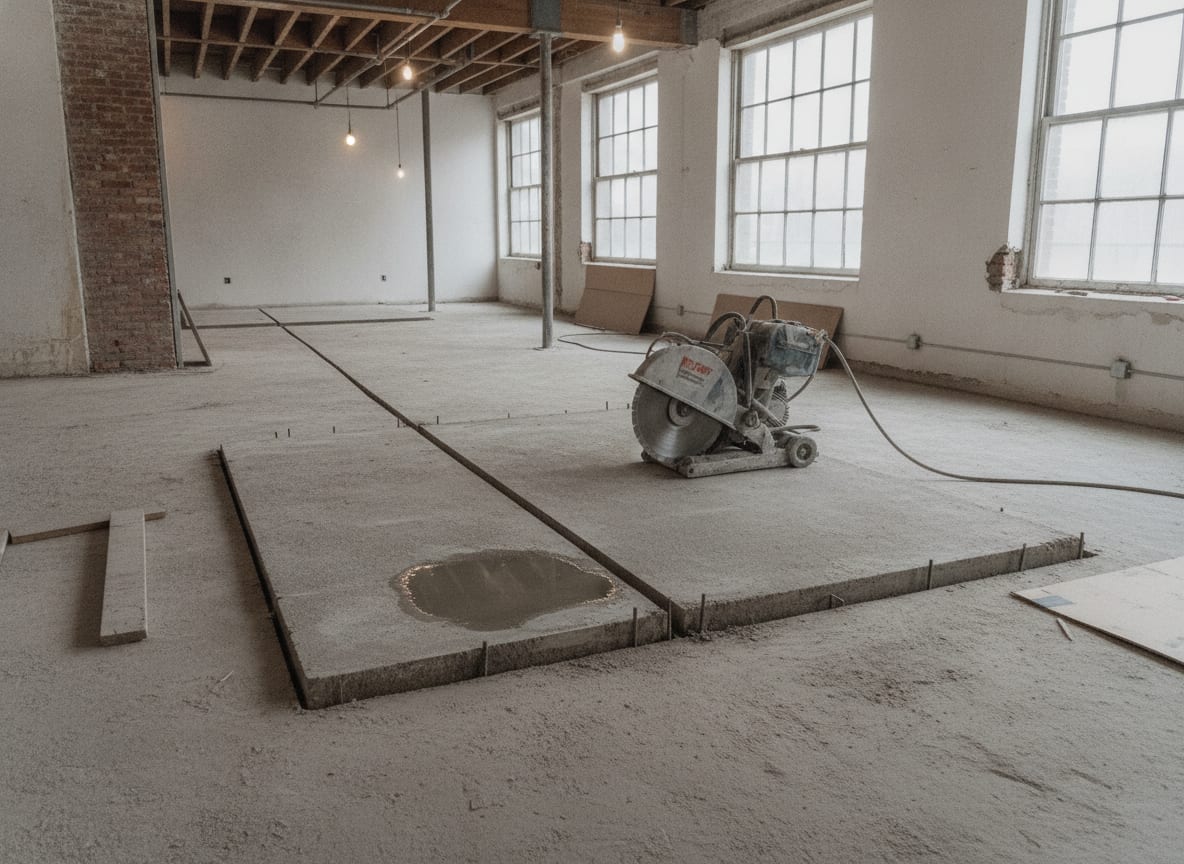
Where the work is an opening in a slab or a wall, or where a section has to come out cleanly next to something that is staying, sawing is the better method. It gives a straight edge, it stops the fracture travelling into concrete that is meant to remain, and it is far quieter than breaking.
Where a whole slab is coming out, breaking is faster and cheaper. We use dust suppression and extraction either way, because concrete dust is the one that travels furthest and settles hardest.
What we check before anything is broken
Concrete usually has something in it or under it. Post-tension cables, rebar, conduit, heating pipes and waterproofing membranes are all common, and cutting one is expensive in a way that is not obvious until it happens.
We establish what is in the slab and what is directly beneath it before the first cut, and where a slab is structural rather than a topping we tell you it needs an engineer rather than proceeding on an assumption.
Concrete is the heaviest thing that leaves the building.
Which is why we plan the route out before we plan the breaking.
Call for an estimate: (929) 205-0712Have concrete that needs to come out?
Tell us where it is and what is under it.
Concrete removal questions
How much does it cost to remove concrete?
Thickness, reinforcement and access, in that order. A four inch unreinforced topping breaks up quickly. A reinforced structural slab of the same area is a different job, because every piece has to be cut free of steel before it can move.
Then it is disposal, which is charged on weight, and concrete is the heaviest material on any demolition job. And then it is the route out, which in a Manhattan building is usually the thing that decides the labour.
We price it from the slab rather than from a rate, because the same square footage genuinely does cost different amounts in different buildings.
How much does it cost to remove 1000 square feet of concrete?
There is no honest single figure, and anyone who gives you one over the phone is guessing at the parts that matter. A thousand square feet of thin unreinforced screed on a ground floor with door access is a fraction of the cost of a thousand square feet of reinforced slab on the fourteenth floor of a co-op with one freight elevator.
What we can do quickly is tell you which of those your job looks like, and then price it properly.
Can I remove concrete myself?
For something small and unreinforced sitting on open ground, plenty of people do, with a hired breaker and somewhere lawful to take the rubble.
Inside a Manhattan building it is a harder proposition than it looks. The weight adds up faster than people expect, the disposal cannot go out with the building's trash, the noise and dust affect neighbours who will complain to the building rather than to you, and if the slab turns out to be structural or has services buried in it the mistake is not a cheap one.
If you want to try it, the thing worth checking first is what is inside the concrete and what is underneath it.
How loud is it, and how long does it go on?
Breaking concrete is the noisiest thing we do, and there is no version of it that is quiet. What we can control is when it happens and how long it lasts.
We keep breaking inside the hours your building permits, concentrate it rather than spreading it over days, and use sawing instead where the job allows it.
What happens to the concrete once it is out?
It leaves as construction and demolition waste through a private carter, like the rest of the debris. It cannot go out with the building's garbage.
Clean concrete is one of the more recoverable materials on a demolition job, so it is worth keeping separate from mixed debris rather than paying landfill rates on it.
Ready to price the breakout?
Tell us the slab, the floor it sits on, and how we reach it.